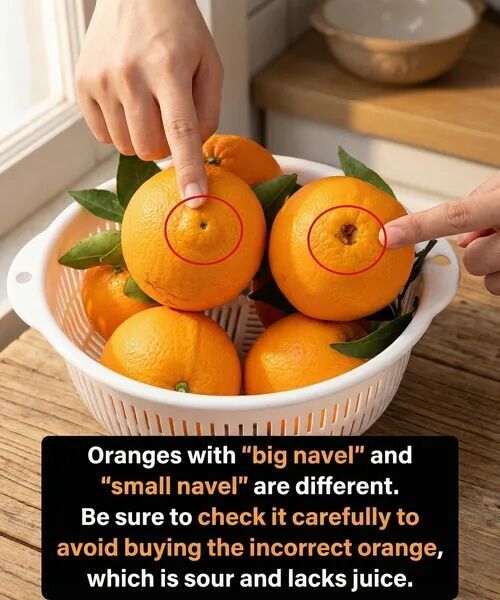
Choosing a good orange may seem trivial, yet even small attentions can reshape the way we taste life itself. Flavor, juiciness, and enjoyment all begin with awareness. Oranges, like people, differ more than they first appear. Learning to recognize their quiet signs of quality transforms grocery shopping from habit into appreciation.
Navel oranges—the kind most often found in markets—are easily recognized by their small “belly button,” the mark of a twin fruit that grew within. This natural design is more than a curiosity; it holds subtle clues about ripeness and sweetness.
The size and shape of the navel matter. A larger, well-defined navel often signals maturity and balance: thicker flesh, fewer seeds, and a fuller sweetness. Smaller or faint navels may point to fruit that ripened too quickly, leaving a sharper or drier taste. The eye learns over time, and discernment grows quietly with practice.
Texture and weight offer further insight. A good orange should feel firm yet gently yielding, its skin smooth and softly radiant. Heaviness for its size usually means abundant juice—the hidden generosity within. By contrast, light or wrinkled oranges often speak of time and loss. And color, though striking, can deceive; even a green-tinged peel may hide perfect flavor inside.
Scent is perhaps the most intimate signal. A ripe orange releases its presence even before the first cut—bright, fragrant, alive. Leaning close to breathe in that freshness is an act of gratitude, a small remembrance that nourishment begins with awareness.
When we pause to choose fruit with such care, the reward goes beyond taste. Every meal becomes a conversation with creation itself—a reminder that goodness often hides in plain sight, waiting for those who look, touch, and breathe with attention.
Selecting oranges, then, is not merely about produce; it is about cultivating perception. With practice, the eye softens, the hand steadies, and even the simplest errand becomes a quiet form of praise.